My Phone Doesn’t Ring As Much Anymore

10 Sep

The year was 2003.

I was turning 22 years old on September 10th, and I had no idea how memorable it was about to become. The day had come and gone, and I couldn’t even tell you what I did, how I felt, or my general mood of feeling about how my birthday had gone that day. It was probably a day like any other. But aronud 8:45pm, that changed.

My cell phone rang, and it was a number not stored in my phone from an area code I did not recognize. Hesitantly, I answered:

“Hello?”
“Hi can I speak to Jason?”
“This is Jason.”
“Oh hey! I just wanted to call and wish you a happy birthday man.”
“Thanks….who is this?”
“I gotta go. Bye!”
-click-

I was baffled. I called the number back but it went to voicemail and I didn’t recognize the name in the greeting. I went to my desktop computer (this was a time before the prevalence of smart phones, but not before Yahoo search was hot on the scene) and searched for the area code. Somewhere in New York. I don’t know anyone in New York. Before I could finish my investigation, my phone rings again. Different area code, somewhere new.

“Hello?”
“Hey Jason happy birthday!”
“Who is this and how did you know it’s my birthday?
-click-

Area code shows up in Yahoo as Seattle, Washington. Phone rings again.

“Hello?”
“Happy birthday man!”
“Who are you and where are you calling from?

I managed to keep this one on the phone a bit longer but he still managed to dodge my questions. While we were talking, another number tries to call, and I let it go to voicemail. I give up on that call and go to listen to my voicemail. While I’m listening to another birthday wish, another call beeps in so I take it. I become immediately overwhelmed and overrun with phone calls and voicemails. My phone battery, which is usually a trooper, starts to slip to the bottom of the barrel. I’m forced to plug it in next to my bed and I’m glued to the wall as I try my best to keep up with the flood of calls coming in. At the peak of this endeavor, I have a total of 7 voicemails and 23 missed calls on my phone. It seemed like it was never going to end. I clamored to get tidbits of information from each caller to figure out what set off this avalanche of phone explosion I can’t seem to escape.

Finally, one reveals:

“How did you get my number?” (I asked through broken laughter.)
“Your brother loves you a lot, man.”
“Nick did this?!!”
“I said too much! I gotta go!”

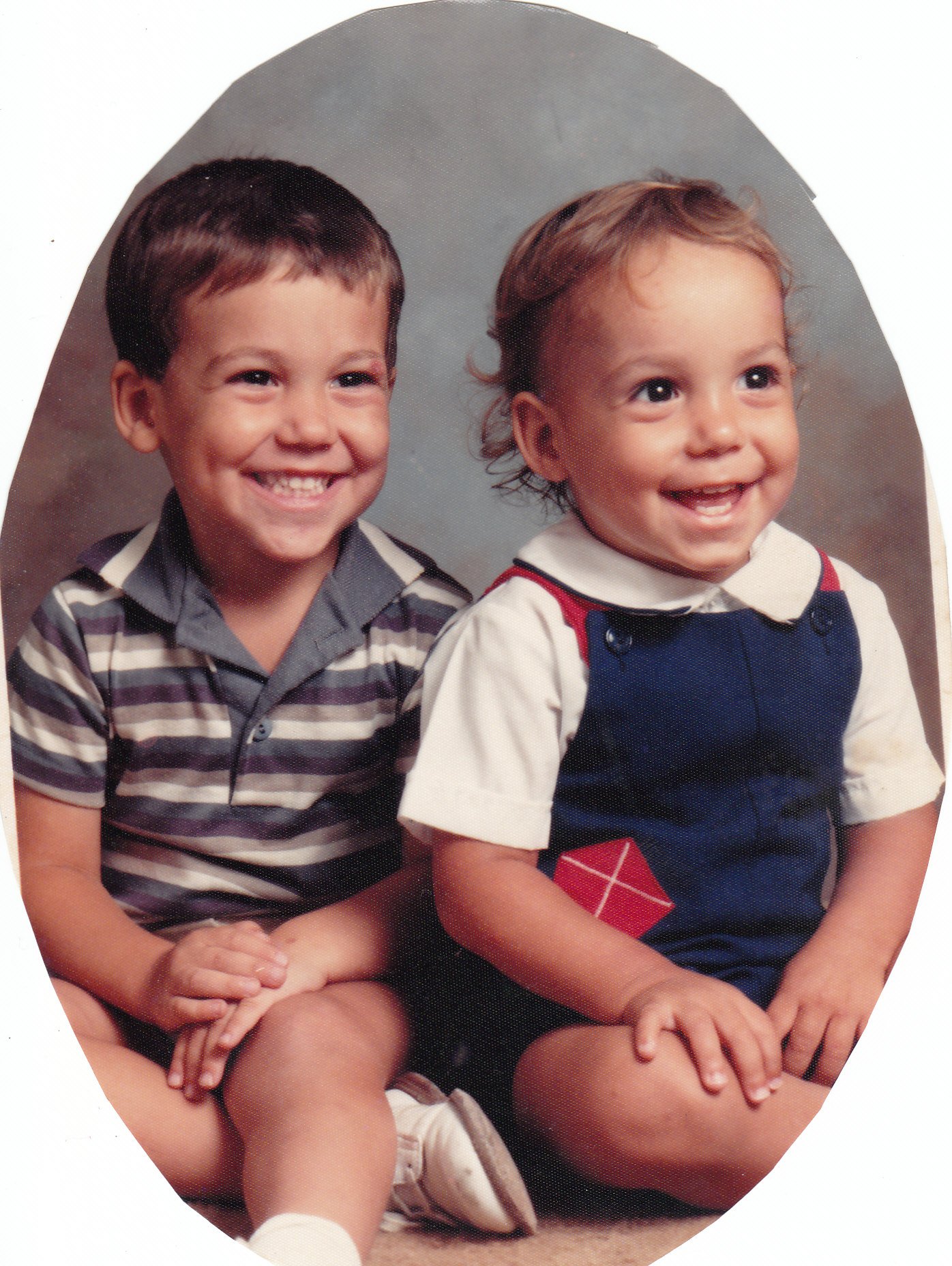
Finally, I have a source! My older brother, who was in his second year at the US Naval Academy as a midshipman, had gone into wherever students were hanging out and put my phone on a bulletin board with instructions to call me and wish me a happy birthday.

I called him immediately and he tried for about 2 seconds to deny it. It was hilarious. I’ll never forget that night. It stuck with me forever, and each birthday, I remember how loved I felt at that moment.

Nick had a way of doing that for people, making them feel loved. It was remarkable.

On June 7, 2010, I received another phone call. This time it was from Nick’s wife, informing the family that he had just been in a terrible accident, and the U-Haul truck he was driving had a tire blow out, and the vehicle flipped across the median on the interstate and struck another vehicle traveling in the opposite direction. Nick didn’t make it.

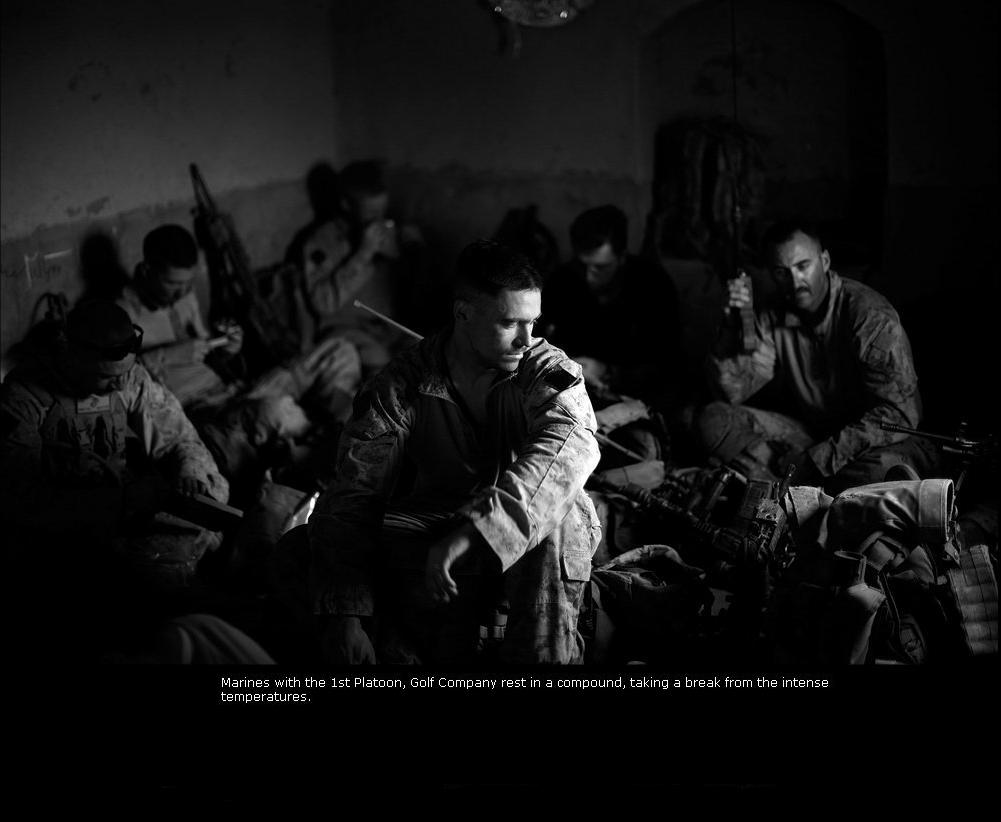
The toughest pill to swallow was the notion of Nick not being invincible. He had just come home 6 months earlier from his second combat deployment as a Marine Corps Infantry Officer, and his second tour was the most dangerous deployment the Marine Corps had experienced since the Vietnam War. His battalion suffered a casualty rate of over 60% during that 7-month deployment, and he was lucky to be alive. He always seemed so unstoppable to me.

My phone doesn’t ring as much anymore. Sometimes it feels a little empty without him, and days like today I remember what a gift it was to have him so close to me in my life for 27 years. My life wouldn’t have been the same without him in it. And I know there are many others that could say the same.

How To Win Every Argument (or: Why My View Is Imperfect)

3 Apr

bsr005

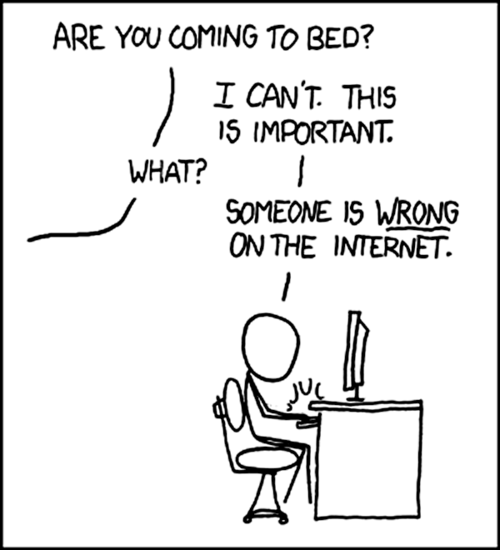
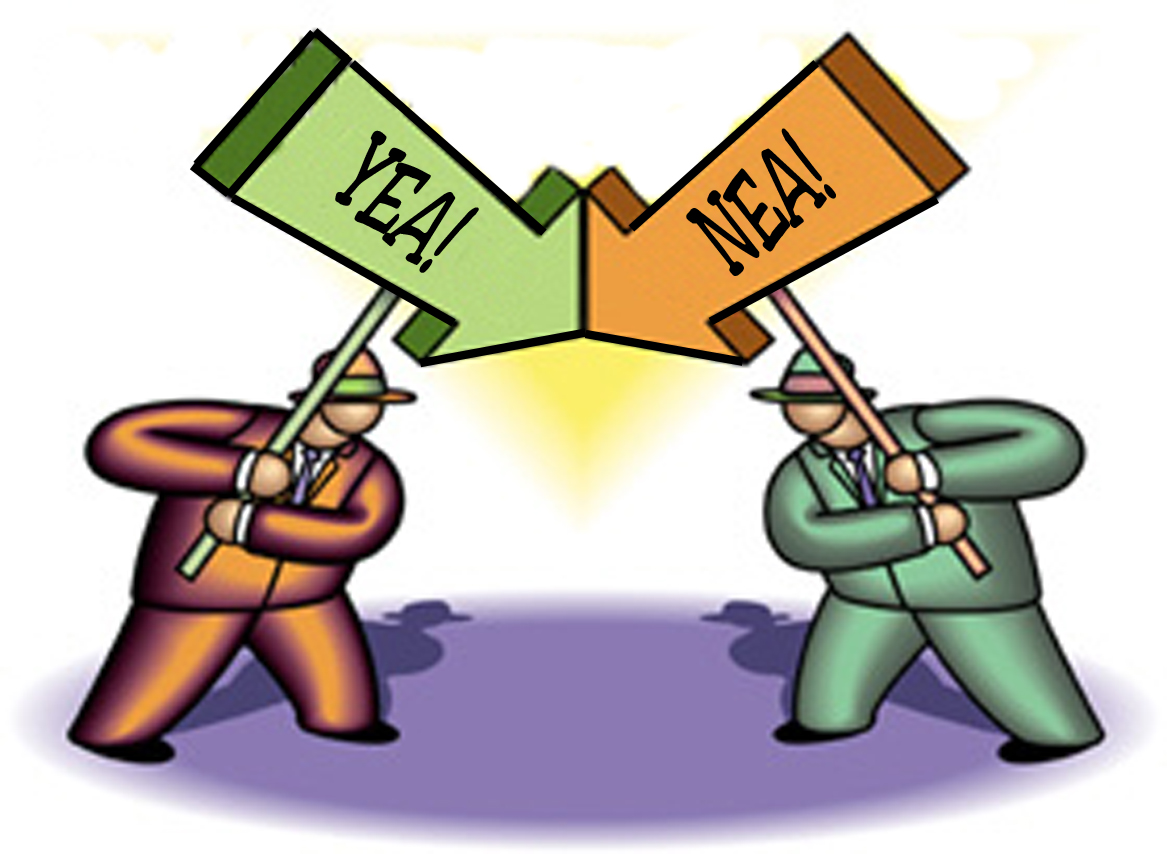
We all want to know that we’re right.  Many times, we’ll go to great lengths to prove exactly how right we are.  We’ll argue with a spouse, a friend, a stranger, someone on the internet, a talking head on the TV screen, a mentor, a leader, a boss, a co-worker, a customer, or even the UPS man.  How long does an argument need to take in order for our view to sink in to the opposing side of the argument?

I wish I knew enough math to formulate an equation giving the answer.  I like to think that it’s approximately 1.73 hours of arguing for every point that needs to be proven.  So if you’re arguing online, it takes a lot longer because of the lag.  You type.  I type.  Point.  Counterpoint.  Someone else interjects.  Get back on topic.  Internet lag.  Walk to go to the bathroom.  Catch up on reading that last wall of text.  Man.  This is taking a while.  It probably takes about 4 hours of online arguing to equate to one hour of real-life arguing.  Probably longer since sometimes you have to make a point before work and follow up to the counterpoint after work.  That’s a lot of time to prove to someone that you’re right and they’re wrong.  But the gratification will only carry to a certain extent, because they won’t come out and admit that you were right.   Oh, no.  They’re much too hard-headed for that.  That would take at least 2 more days.  We usually tucker out before then.  The truth is that most people don’t have the time, energy, determination, or focus to follow that through to completion, so most arguments online end in either a stalemate, a draw, or all-out war.

Someone is wrong on internet

So how do you flex your “right” muscles hard enough so that nobody even dares to step up to you again?  I found the secret: I call it a patent on the truth, and have determined that I don’t hold the patent.

There is an absolute truth, and absolute right, and an absolute wrong in every argument.  How prideful do I have to be to think that I hold the absolutes in every situation?  The first step is to be honest with yourself in what is an assumption and what is fact.  The second step is to be open to the fact that you’re probably wrong about some things.  I actually enjoy it when someone can prove me wrong.  Instead of attempting to prove myself right, I’m asking someone else to prove me wrong.  Still, no matter how long an argument may last, I can never seem to be proven wrong.  Why is that?  Why is everyone so inferior to me?  Why can no one see the things that I see, the way that I see them? (/sarcasm)

It’s likely because we see everything through our own filters.  Filters which were created through our childhood, family of origin, life experiences, and all sorts of other determining factors.  It’s how we have optimists and pessimists.  No matter how much I argue, I can never put my filters on someone else’s eyes.  I either have to be content with that or continue to be disappointed in everyone else.  I have filters that create a world around me that no one else will ever see.  It’s truly magnificent.  It’s my own bubble of awesome that no one else can penetrate.  You can’t prove me wrong in here and I can’t show you how I view the color blue.  But it’s fine because that’s how I like things.

What happens if we step outside of our bubble?  It’s kind of scary out there.  Viewing things through another person’s perspective can be intimidating – maybe even frightening for some.  If you take a moment to get to know someone at a real level (their fears, hurts, pains, joys, dreams, hopes, achievements, and insecurities), then you might be less inclined to prove them wrong in the first place.  You might even be more aware of your own level of wrong to the point that you won’t enter the argument at all.  Perspective matters, and each person has their own for a reason.  It’s not my job to change your perspective.  The best thing I could do for you would be to phrase things as a question: “What if things were this way?  How would that change things in this situation?  How would we respond if all of a sudden they changed this or that?  What would it mean if the sky was suddenly pink?”

enlightenment-tolle-kant

That’s the most humble, enlightening approach you can take.  All of the great philosophers simply asked questions.  Sometimes they asked the right questions, and sometimes they asked the wrong questions.  Sometimes they got answers, and sometimes they did not.  But what they all had in common was the pursuit of knowledge.  It’s actually what Plato determined at the end of his book, The Republic, as true justice.

So pursue knowledge.  Enter a discussion with the expectation to learn.  Don’t go into an argument with the determination to come out the victor.  Start speaking with humility and be quick to admit you might be wrong about something.  Don’t fool yourself into thinking you’re the only one that’s right about everything.  Even if it’s something you’re especially knowledgeable, well-versed, or experienced in.  With just a little bit of humility and willingness to learn, even a fool can teach you something new about a topic or subject.

Lastly, when you truly are right, it’s important to recognize that sometimes you do yourself the biggest favor by not entering the argument to begin with.  Just rest assured knowing that you’ve got the truth, and understand that there may be people who will never understand your truth to begin with.  You can’t win everyone over.  Learn to know the difference.

The Day The Government Stopped

2 Oct

Image

Due to narcissistic politicians that the majority of the American voting public has employed, millions of government workers had the day off.  Others were required to work with no pay, lest they be counted AWOL (Absent Without Leave).  Everything non-essential that the federal government funds directly was cut today until some sort of resolution can be made.  Everybody is focusing on the symptom, but nobody is focusing on the problem.  That’s probably because the problem is quite complex and doesn’t fit neatly into a sound byte on headline news stories.  It’s also easy to anger the American public by doing something drastic.  Your emotions are being toyed with, and it’s up to us to remain stoic in the face of rough winds.

The fact of the matter is that we keep reaching this same stalemate because our politicians have not published a revised, workable budget in years.  They keep kicking the can down the road.  It’s hard to say when it started, and it’s hard to say exactly how much it’s intensified since Obama took office.  He’s not necessarily the cause…he’s a symptom of the problem.  The America of our grandparents would not have entertained an imbecile like him in public office, much less even on a presidential ballot.  But that’s here nor there.  He didn’t cause this; he merely lacks the leadership necessary to guide us out of it.  And he has been duly elected by our lowest common denominator of our country.  He fed upon the desperation of those who felt disenfranchised by our political leadership and rose to power on their backs through empty promises of hope and change.  That’s all well and good, but at the end of the day, he only knows how to motivate people through anger, fear, division, or general desperation.  He lacks the experience necessary to bring about a positive result without the need to climb upon someone else’s back to accomplish it.  But again, he’s merely a symptom.

The real problem we face is that we have been convinced that the people we elect are truly upholding any principle whatsoever.  We’re given purchased, vetted, and bred politicians whose loyalty is not to the American people, but to themselves and the money that put them in the position they hold.  Primarily, it is the political party itself that drives their actions, and not their principles.  I’ll present an example to illustrate my point:

Suppose I have a principle which states I will not eat meat under any circumstance, because I view the slaughter of an animal in captivity to be inhumane.  You can agree or disagree with my decision on the matter, but you could at least respect that I maintain that principle and will uphold it at all costs.  Now suppose that I were to run for political office as a party member (republican or democrat does not matter for this illustration).  There’s a good chance that the political party that is funding my very expensive campaign receives a great deal of funding from the meat packing industry.  So before I’m even on the ticket to run, I have a very important principled decision to make: Do I stand by my principle and run on my own merits, with no party backing, and likely no chance at all of my campaign seeing the light of day?  Or do I make this small compromise, maintaining that I will still not eat any of their meat, but their money is good enough for me to get elected, because I know all of the good I will accomplish once I’m in office?  It’s a tough decision, and it’s the same type of decision that every elected politician has faced at some point or another.  Every one of them stuck with their party.  They put on a blinder and convinced themselves that the good would outweigh the bad in the end.  And perhaps it will for some of them.  But many times, once they’re in bed with the party, they’re strong-armed into siding with a law or bill that goes against their principles.  It starts slowly, but eventually, once they’re numb to the guilt, we the people are left with a John McCain.  It’s truly a nightmare, and it’s all over Washington, D.C.

So now we’re faced with each side sticking to their party platform at all costs, and the only REAL losers are millions of government employees.  Keep in mind that shutting down the government (as they’re calling it) does not affect you and I, Mr. & Mrs. Johnny Civilian.  It only affects those employed by the government (my reason #596,340 for separating completely from the federal government).  Let’s be fair: they don’t really deserve this treatment.  Many of these government employees are hard working Americans like you and me that worked hard to obtain the job they currently hold.  But since we’re being honest, do all of those jobs TRULY need to exist?  I submit that they do not.

I would like to see honest policy makers take a close look at the functions of the federal government and take the drastic measures necessary now to downsize our government and bring it to a manageable, functional, constitutionally-limited size.  But I’m afraid only a handful in office are willing to do so.  I have no faith in our government figuring this out.  I’m fully confident that they will agree to incur more debt, kick the can a bit further down the road, not implement any real, worthwhile changes, and keep the money train moving.  Because the American public would be outraged if they were to pull back the veil of our wealth and show it for the train wreck it truly is right now.  Everything you see is smoke and mirrors.  That nice car you drive isn’t truly worth the price tag you paid for it.  That dollar bill in your hand really isn’t worth the number in all four corners.  That house you’re sacrificing so greatly to afford could easily be valued at half of what you owe on it.  Those are the honest answers that are being shielded from you, because our politicians tell one another that you cannot handle the truth.  It’s time to ask yourself: Can you handle the truth?  And if so, what will you do about it?

Don’t Wish Me A Happy Memorial Day

27 May

Image

I have a tendency to be a nice person.  Call it a weakness, if you will; I can’t seem to help myself at times.  That being the case, I typically choose the agreeable side of an argument, often grant the benefit of the doubt, and frequently attempt to bridge the gap in communication that derails even the most mundane of conversations.  When I find myself being more direct in how I communicate things, I’m careful to ensure that I’m articulating the actual matter at hand and not interjecting my own thoughts, opinions, or feelings.  Thus my Facebook posts are generally more polite, understanding, and considerate.  I’m going to do my best in this blog to remove those self-imposed boundaries and state truth as I see it.

Memorial Day is a solemn holiday intended to preserve the memory of those who have died while in active military service to the United States.  It is anything but a happy, festive day.  Our country recovered from a nasty, bitter war that pitted brother against brother.  We came through that and were once again unified, but not without the pain of knowing what we had done to ourselves.  In an attempt to never forget the lives that were lost, we designated one day per year that we would choose to remember those that died in our Civil War.  It is that remembering, I believe, that maintained the unity in our country for the century that followed.  By remembering the sacrifices that were made, we are continuously aware of the ugliness that is war, of the disgusting nature of combat, and of the blood that had been shed on our very own soil which made us the country we are today.  It is that reminder that we carry on throughout history, as we’ve expanded the observation of Memorial Day to include every war we have been involved in since the Civil War.

Memorial Day is not a sad day, but it is a very necessary day.  It is necessary for America because there are those who live every day with the memory of a loved one who was lost, and there are those who live every other day with no conscious thought to the sacrifices that were made in their stead.  By having a set aside day, we all come under one accord and level the playing field, if you will.  It gives those who grieve the necessary accompaniment to bear their grief.  And it gives those who rejoice the grounded foundation with which to accurately appreciate the freedoms they enjoy.  But most importantly, it reminds us, as a country, of what our country could become if not protected from within.

I’m embarrassed for someone when I hear them wish someone else a happy Memorial Day, because it shows their ignorance (or is it lack of proper education?) of the origin.  The same goes for when people thank me for my service in the military on Memorial Day (or any day, for that matter; but that’s a personal peeve).  There is no “service” that any living person has given that should be thanked on Memorial Day.  Doing so cheapens the deaths that are to be memorialized.  But, being my polite self, I don’t typically say such things in person.  It’s too easy for people to write me off as rude.  So I politely smile, nod, and move on with my life.

It worries me somewhat that Americans have forgotten what Memorial Day is about.  The very fact that we are forgetting our special day of remembrance is a sign that we are on the path of repeating our history.  I see warning signs of an impending civil war in our own society, as the “war on the middle class” clashes with the “war against poverty” and other types of “class warfare.”  I’m afraid that our next civil war won’t be as neat and clean, divided by geographical lines and different color coats.  I’m concerned that my children may have to experience an America torn apart from the inside, ripped not only at the seams, but at every stitch of thread that holds the fabric together.  We’re allowing talking heads in a box to tell us what we want, how to think, where to go, and who to love.  This is a very sad time.

This Memorial Day, I’d like to encourage America to remember the Civil War.  Since you’re off of work anyway, spend about 30 minutes researching what brought it about, how it started, how it was fought, and how it ended.  You may be surprised to find that it’s not what you were taught in the history books, and slavery had very little to do with it (if anything).  As George Santayana (1863-1952) said: “Those who cannot remember the past are condemned to repeat it.”

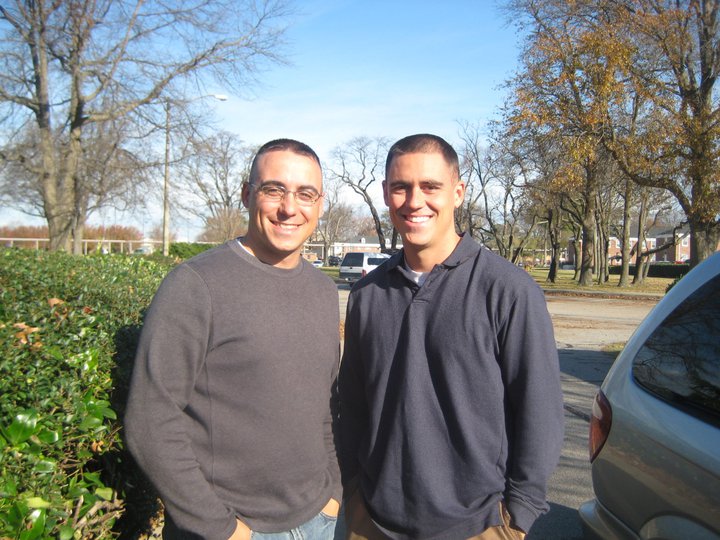
My memories will be centered around my brother, Nicholas, whom I lost 3 years ago on June 7th.  He was a great brother, father, son, husband, uncle, and Christ-follower.  He was my very first friend, and much of what I’ve accomplished in my life has been either in competition with him, in spite of him, in following him, or in fighting him.  I couldn’t have had a better role model for nearly 28 years of my life.  One major lesson I learned from his death is that memories can be easily forgotten when they’re not actively recounted.  Make an effort this Memorial Day to actively recount the significant memories not only in your life, but in this brief life our country has lived.

Image

Image

Nick in Afghanistan

Nick Homecoming

image_1363460748127088